Clean and Dry, No Shortcuts
Sealer only goes down over pavers that are fully clean and completely dry — not just rinsed. Skip that step and you trap moisture under the seal, which shows up later as cloudy patches you can't spot-fix.
 GROUNDWORKSPAVERS & TURF
Call now
(321) 586-9227
GROUNDWORKSPAVERS & TURF
Call now
(321) 586-9227
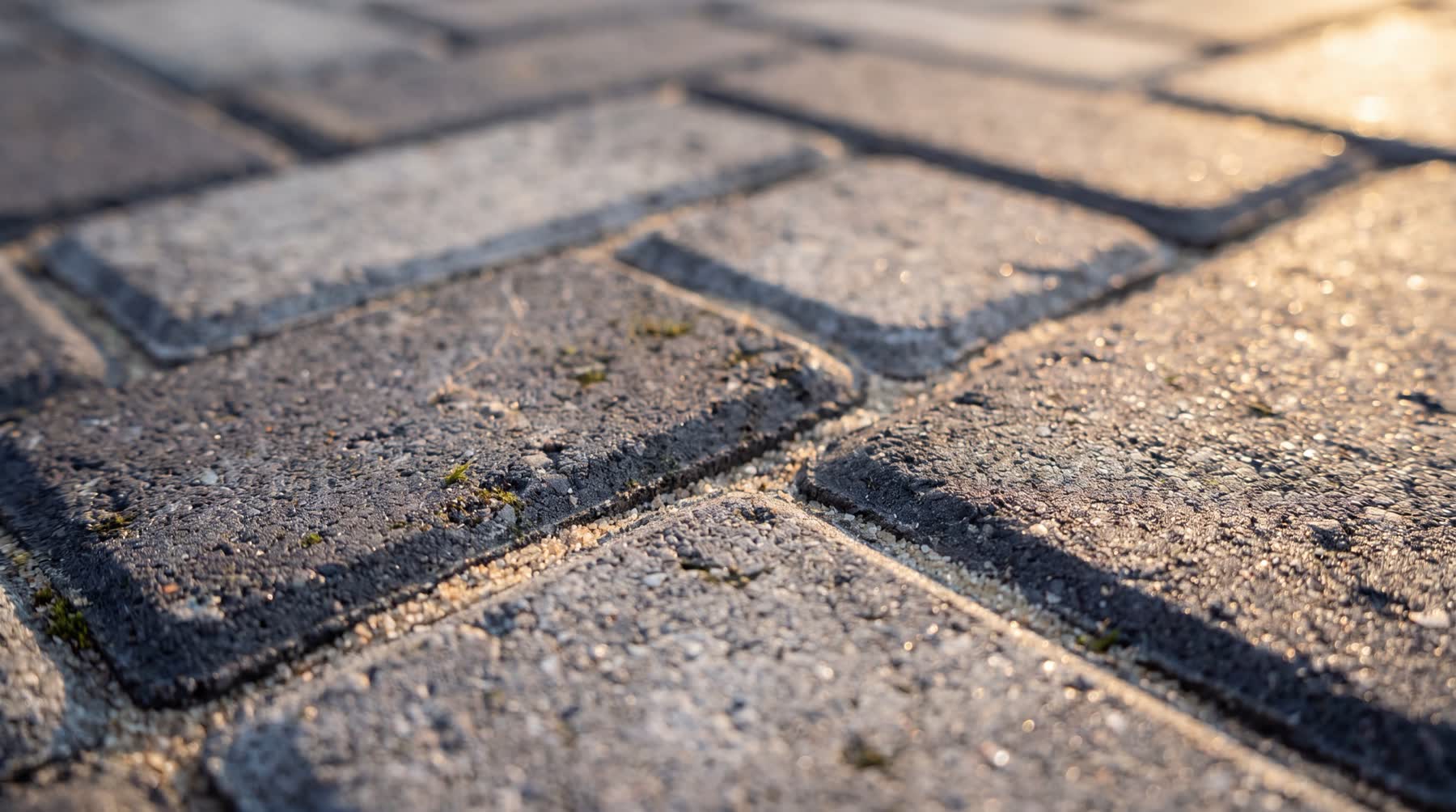
SALT ON TWO SIDES. SEALED TO TAKE IT.
Merritt Island sits between two lagoons, so your pavers face salt air from both directions, not just one. We clean and seal them to handle that, not just to make them shine.
Paver cleaning & sealing in Merritt Island
Being surrounded by water sounds nice until you think about what salt air does to a paver surface day after day. Merritt Island pavers face that exposure from two lagoons at once. Sealing slows the UV fade and the salt breakdown that wear on a surface finish over time, and it's worth doing on a schedule instead of waiting until the driveway looks chalky and gray before you call.
Before we seal anything, the surface has to be clean and completely dry — sealer applied over damp pavers traps moisture underneath and causes cloudiness you can't fix without stripping it back off. Around a pool deck here, that means timing the job around pool use and rain, not just showing up on a Tuesday. We offer a wet-look finish or a matte finish — both hold up the same against salt air, they just look different. Plan on resealing roughly every two to three years.
What that looks like here
Sealer only goes down over pavers that are fully clean and completely dry — not just rinsed. Skip that step and you trap moisture under the seal, which shows up later as cloudy patches you can't spot-fix.
Merritt Island pavers take salt air off two lagoons, not one. We seal to slow the UV and salt breakdown that dulls a paver surface over time, on a schedule that actually matches that exposure.
Want the color to pop, go wet-look. Want it to look more like the day it was laid, go matte. Either way the sealer does the same job protecting the surface underneath.
By the numbers
The Brevard County tax roll counts 15,967 single-family homes in Merritt Island. The typical one was built in 1978, and about 82% were built before 2000.
With most homes here past twenty-five years old, a lot of the pavers and slabs have decades of sun and rain on them. That usually means cleaning and re-sanding before any sealer goes down.
Source: Florida Department of Revenue, Brevard County 2026 preliminary tax roll.
Free estimate
We'll measure, look at where the water goes, and leave you an itemized written estimate — anywhere in Merritt Island. No charge, no pressure.
Watch a real one
Levi walks a real Brevard driveway through the whole thing — the wash, the re-sand, the seal — in under a minute. Sound on for the walkthrough.
Most of our sealing work is on pavers somebody else laid — jobs that start exactly like this one.
Get the same estimate — freeThinking of doing it yourself?
Merritt Island sits where salt air and humidity make the drying window the hardest part of the job. Sealer has to go down on a surface that is dry all the way through the paver and the joint sand — and beachside, morning dew, sea breeze and afternoon humidity keep pulling that window shut. The most common DIY failure here is a surface that looked dry on top while the sand underneath was still damp, which shows up a day later as milky white haze locked under the coat.
Salt also leaves a fine film a garden hose does not remove. Sealer applied over it bonds to the film rather than the paver, and that is the layer that peels first — usually along the edges that catch the most spray. Techniseal’s own instructions call for a clean, dry surface between 50°F and 85°F during application and for the 24 hours after it, with no rain in that window: beachside, that combination is the constraint, not the sealing itself.
Honest comparison
Where the two paths actually differ — and what happens when a coat goes wrong.
| Doing it yourself | Groundworks | |
|---|---|---|
| Surface prep | Rented washer, homeowner technique — the pressure that lifts old sealer is also the pressure that erodes paver faces and blows out joint sand. | Cleaning matched to the surface, plus the algae, rust and efflorescence treatment a rinse alone doesn’t touch. |
| Drying time | Judged by eye. The paver top dries hours before the joint sand underneath does. | Judged by condition and forecast — the step most often skipped, and the one most failures trace back to. |
| Temperature window | Air temperature off a phone app. | Surface temperature checked — above 90°F at the surface the bond fails, and surface runs far hotter than air. |
| Joint sand | Easy to seal before the sand is set, or to use a sand that isn’t right for the joint. | Re-sanded and set first — and after polymeric sand, manufacturers specify a 30-day wait before sealing. |
| Product choice | Whatever the store stocks — solvent and water-based, film-forming and penetrating, all sold side by side. | Chosen for the surface, its exposure, and the finish you actually want. |
| How much to buy | Estimated from the bucket’s headline coverage rate. | Calculated from the real rate — a penetrating sealer needing two mandatory coats covers roughly half what a single-coat figure suggests. |
| Application | Roller or pump sprayer, wet edge held by hand across the whole area. | Even coverage at a consistent rate, low-pressure spray, edges and adjacent surfaces masked. |
| If it goes wrong | Once cured, it has to be chemically stripped — dwell time, a second application if any re-adheres, vegetation soaked to protect it, then re-sanding — before anything can be re-applied. | Corrected by the crew that applied it. |
On a small patio with a penetrating sealer and a real dry window, doing it yourself is a reasonable project — we say so plainly in our honest DIY comparison. If a coat has already gone cloudy or started peeling, start with fixing a seal that went wrong.
Local questions
Roughly every two to three years, though salt air and pool chemicals can shorten that. We'll look at your specific surface and tell you honestly if it's holding up or due, instead of just selling you a reseal on a fixed calendar.
No — we use sealers suited for pool deck use, and matte finishes in particular keep more of the paver's natural texture underfoot. With as much barefoot traffic as pool decks get, that texture matters more than the shine.
No, and this matters more on Merritt Island than most places — the surface has to be completely dry before sealer goes on, not just rain-free for an hour. We check moisture before we start, and if it's not ready, we reschedule rather than seal it wet.
Keep looking around
Fastest answer
Most questions we can answer on the phone in two minutes, and if we need to see it we'll book the walkthrough while you're on the line.
(321) 586-9227Or text a photo of the space — that's often the fastest way to get a real answer. Prefer email? [email protected].
Free estimate
Tell us what you're picturing and we'll come measure it.
Five quick questions — then you're booked in and someone reaches out within 5 minutes. Prefer to talk? Call (321) 586-9227.