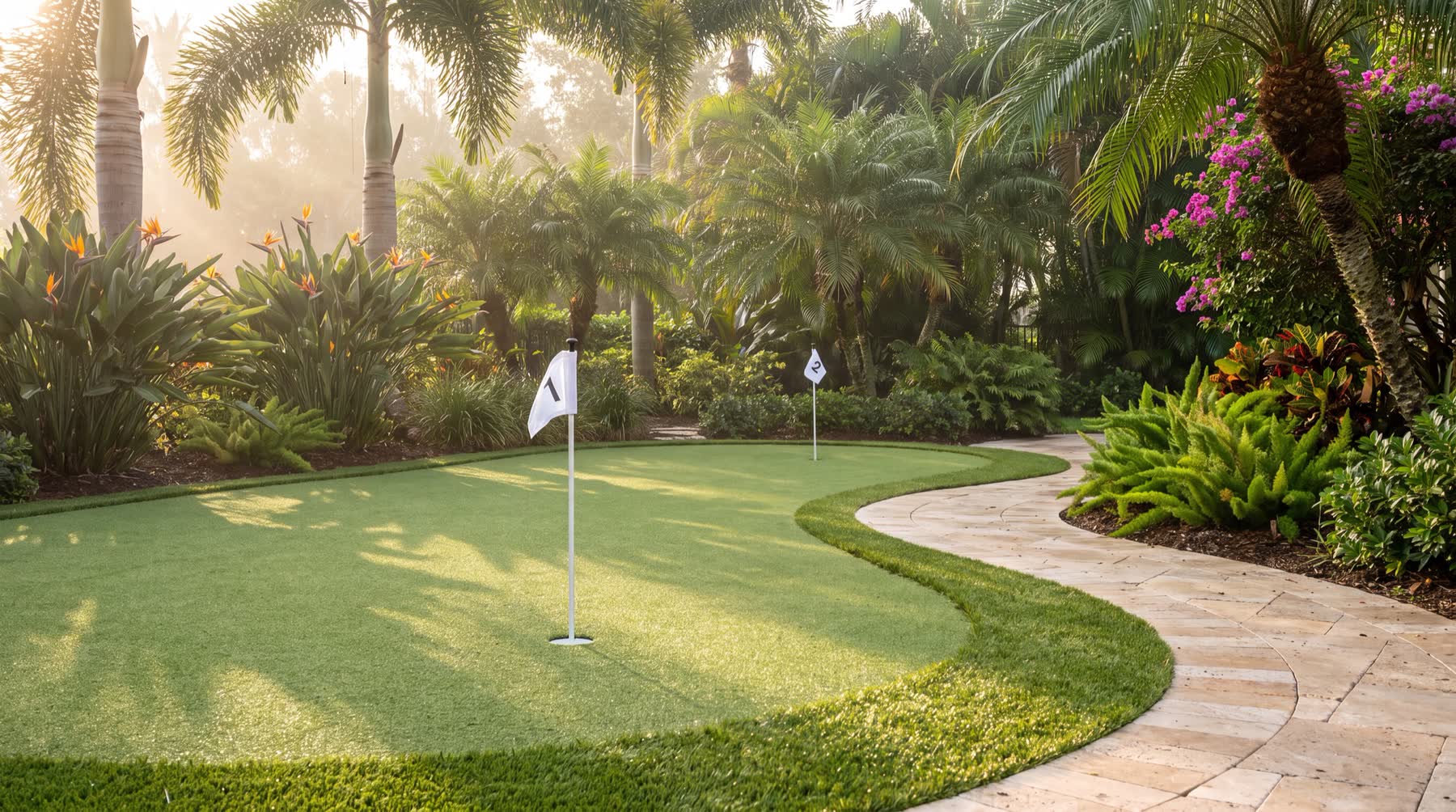
A lot of Port St. John households commute, and a lawn that needs mowing every week is one more job on a weekend that's already short. Turf takes the mowing, the edging and the sprinkler schedule off the list for whatever part of the yard it covers. Lot sizes here vary widely. Panther Ridge lots run about 5,700 square feet on the tax roll, small enough to turf the whole backyard. Hundred Acre Woods lots run about half an acre, where it usually makes more sense to turf only part of it.
The tradeoff is heat. Turf in direct afternoon sun heats up fast in summer, and a patch that bakes from lunch until sunset is no place for bare feet, so we talk about placement before layout. Underneath, the base gets graded and compacted so a summer storm drains through instead of sitting in the yard. Some Port St. John streets have HOA architectural review and some don't. If yours does, have the turf approved in writing before anything gets scheduled.
What that looks like here
Port St. John work, specifically.
Small Lot, Whole Backyard
On a compact lot like the ones in Panther Ridge, a thin lawn tends to wear out in the same few places, and patching it every spring gets old. Turfing the whole backyard gives you one surface from the fence to the back slab, with the edges tucked tight against both. There's no mowing strip to edge along the fence anymore.
Bigger Lot, Pick the Spots
On a half-acre lot like those in Hundred Acre Woods, turfing everything is a big job and usually not the point. Most people pick the part they use and look at most, such as the yard just outside the lanai or the worn path to the side gate. Grass can keep the rest. Less turf means a smaller estimate and less to rinse.
For the Dog Who Has the Yard All Day
If the dog has the yard while you're at work, the grass along the fence wears down to a dirt track. Turf takes that traffic without the mud. Odor is decided underneath, by a base that drains and the infill that goes in, so we settle both before anything is ordered. A rinse of the dog's usual spots when you get home helps.
By the numbers
Port St. John homes, by the numbers.
The Brevard County tax roll counts 10,079 single-family homes in ZIP 32927, the Port St. John ZIP code. The typical one was built in 1990, and about 74% were built before 2000.
Older lots here often have mature trees and shade, which decides where real grass will grow and where turf makes more sense.
Source: Florida Department of Revenue, Brevard County 2026 preliminary tax roll.
Free estimate
Start with someone walking your yard.
We'll measure, look at where the water goes, and leave you an itemized written estimate, anywhere in Port St. John. No charge, no pressure.
In everyday talk, yes. AstroTurf is a brand name that goes back to a short, stiff sports surface from the 1960s, and people still use it for any artificial grass. Turf made for home yards today is softer and fuller, usually with blades in more than one shade of green, and its backing lets rain drain through to the base underneath. That base decides how well it holds up.
We're gone all week. How much time does turf take to keep up?
Less than a lawn, and most of it is hose work you can do on a weeknight. Rinse it when pollen or dust builds up, brush the busy spots when the blades flatten, and clear leaves before they rot into the infill. A pet area needs a rinse more often, especially in summer. There's no mowing, edging or fertilizing, though it isn't zero work.
Our HOA reviews exterior changes. What will they want to see for turf?
Usually some mix of a product spec sheet or sample, a site plan showing where the turf goes, and contractor details. Some communities allow turf only in the backyard. Ask the board in writing, get the answer in writing, and send it to us so the estimate matches what they approved. The permits and HOA page has the full list of questions to ask.