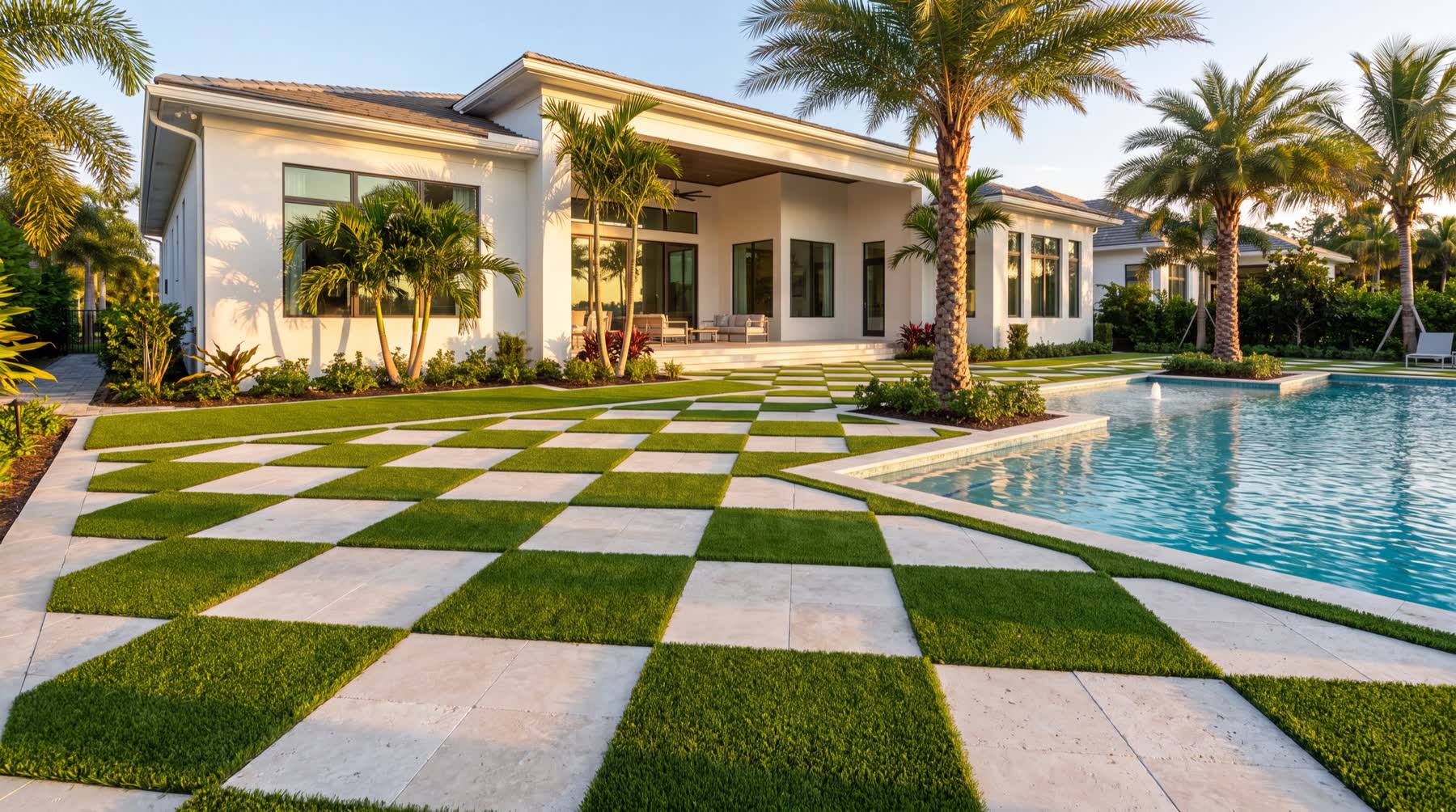
Palm Shores lots are compact, and the shaded strip between houses is where grass gives up first. Turf fills it, as long as the water has somewhere to go.
On most Palm Shores lots, the grass fails first in the narrow side yard, where the house next door blocks the sun for most of the day. Turf doesn't need sunlight to stay green, so that strip, a small backyard or the ground around the patio can stay usable without reseeding it every year. There isn't much yard to cover on a lot this size. That keeps the job small and the decisions simple.
The catch on a tight lot is water. Roof runoff from your house, and sometimes the neighbor's, ends up in that side strip, so the turf base has to carry water along and away from both foundations instead of holding it there. We sort that out before anything else. If an association covers your street, ask it in writing whether turf is allowed, and whether that includes the front yard or only the back.
What that looks like here
Palm Shores work, specifically.
The Strip Between Houses
A narrow side yard that never gets sun is a hard place for grass and a good one for turf. We build the base to move water out of the strip, away from both houses, and keep the turf clear of the AC pad and anywhere a utility needs access.
Shade Helps, Sun Still Bakes
Turf in the shaded side strip stays a lot cooler than turf in open sun. The sunny part of the backyard is another story. By a summer afternoon it's hot enough that you'll want shoes, so if the kids or the dog play out back, we'll talk about how much of that sunny stretch to turf.
Small Yard, Used Every Day
When the yard is small, every part of it gets walked on, and grass in a small, busy yard wears through fast. Turf takes daily foot traffic, kids and a dog without going bare. The blades flatten where traffic is heaviest, so a brush now and then stands them back up.
By the numbers
Palm Shores homes, by the numbers.
The Brevard County tax roll counts 361 single-family homes in Palm Shores. The typical one was built in 1994, and about 64% were built before 2000.
Older lots here often have mature trees and shade, which decides where real grass will grow and where turf makes more sense.
Source: Florida Department of Revenue, Brevard County 2026 preliminary tax roll.
Free estimate
Start with someone walking your yard.
We'll measure, look at where the water goes, and leave you an itemized written estimate, anywhere in Palm Shores. No charge, no pressure.
Yes. Turf doesn't need light the way grass does, so a shaded strip between houses stays green year round. Plan for two things. Those strips often collect roof water, so the base has to drain it out. And a damp, shaded spot holds onto leaves and dirt, so it needs a rinse and a sweep more often than the sunny part of the yard.
Can sunlight reflecting off a window really melt artificial turf?
It can. Some double-pane windows with energy-saving coatings flex slightly inward, and that curve can focus reflected sunlight onto a small patch of turf hot enough to melt the blades, the same way it can warp vinyl siding. On close-set lots it's worth checking which windows face the turf, yours and the neighbor's. A window screen or a film that cuts the reflection usually solves it, or the turf can stop short of that spot.
Does salt air hurt artificial turf this far from the beach?
It won't ruin it. Salt air is lighter in Palm Shores than out on the barrier island, but it still leaves a film on turf the same way it does on pavers and cars. A rinse with the hose clears it. That fits in with the rinsing you'd already do for pollen and dust, so it isn't a separate chore.